The future of mixed reality (MR) stands at a critical juncture, influenced by rapid advancements in technology. The convergence of sophisticated hardware and software promises to redefine user interactions and experiences. Industries are beginning to integrate MR solutions, yet significant challenges remain. As these technologies develop, questions arise regarding their long-term impact and potential barriers to widespread adoption. What will it take for MR to become an integral part of everyday life?
Key Trends Shaping Mixed Reality
Key trends shaping mixed reality (MR) are fundamentally altering the landscape of technology and user interaction.
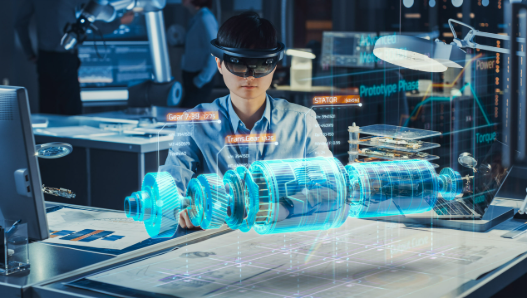
Immersive experiences are increasingly prioritized, leading to the development of advanced user interfaces that seamlessly blend digital and physical realms. This integration fosters enhanced engagement, allowing users to navigate environments intuitively.
As MR evolves, it promises greater freedom in how individuals interact with and perceive their surroundings.
Applications of Mixed Reality Across Industries
As industries increasingly embrace the potential of mixed reality (MR), innovative applications are emerging that transform traditional practices and enhance operational efficiency.
In healthcare training, MR simulates real-life scenarios, while virtual collaboration boosts teamwork across distances.
Retail experiences evolve with immersive environments, and gaming enhancements engage users.
Furthermore, architectural visualization, remote assistance, educational tools, and advertising strategies leverage MR to create dynamic, interactive experiences.
Challenges and Limitations of Mixed Reality Technology
While the potential of mixed reality (MR) technology is vast, several challenges and limitations hinder its widespread adoption and effectiveness.
User experience can be compromised by hardware limitations, which often restrict the immersive quality of applications.
Additionally, software compatibility issues create barriers for seamless integration across platforms, ultimately affecting user adoption and stifling innovation in this transformative field.
See also: nsnewsindia
The Future Outlook for Mixed Reality Developments
Despite the existing challenges and limitations of mixed reality (MR) technology, the future holds significant promise for its development and integration into various sectors.
Enhanced user interfaces will enable seamless interactions, fostering immersive experiences that blend the physical and digital worlds.
As innovations in hardware and software continue to evolve, MR will revolutionize industries, empowering users with unprecedented freedom to explore and create.
Conclusion
As the horizon of mixed reality expands, it resembles a painter’s canvas, where each stroke of innovation brings forth vibrant possibilities. Just as a brush transforms a blank surface into an intricate masterpiece, MR technologies are set to revolutionize sectors like healthcare and education. With ongoing advancements overcoming existing hurdles, the future of mixed reality promises a seamless blend of the physical and digital realms, inviting users to collaboratively craft experiences that were once confined to the realm of imagination.